
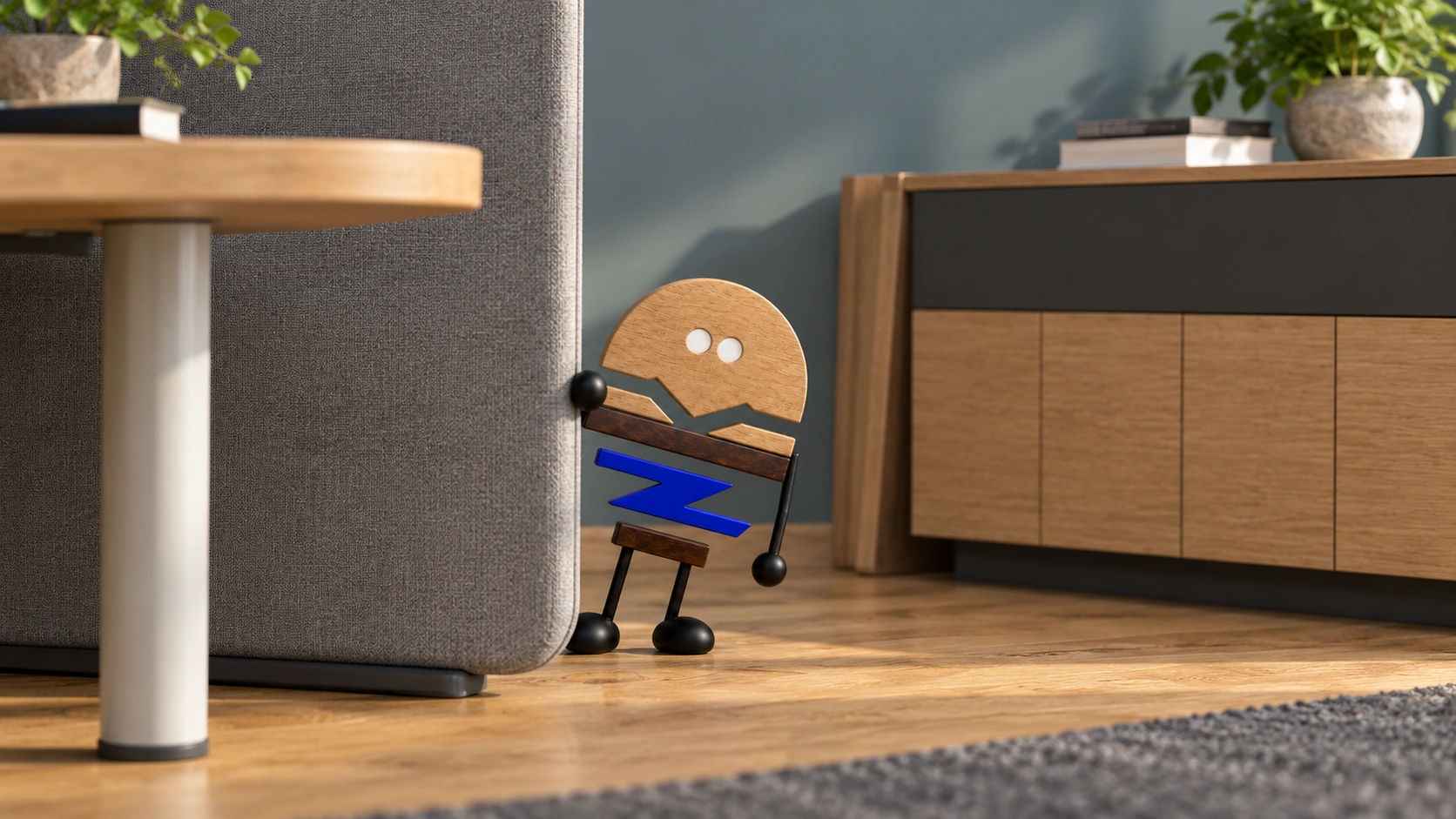
Whether an office feels calm, welcoming, oppressive or orderly often begins with the proportions, edges, materials and junctions of its desktops, cabinet fronts and screens.
How an executive space works and the first impression of its desks, cabinets and screens are different questions. Here, 'expression' means the immediate character of furniture surfaces: cool or warm, confined or expansive, temporary or stable, cluttered or orderly.
Meichun's manufacturing and product experience provides the starting point here. The character of desktops, cabinet fronts and screens emerges through proportions, edges, materials and the way surfaces meet.
01 · FUNCTIONAL, YET UNCOMFORTABLE
Functional furniture can still create an uncomfortable first impression.
Every piece may work: desks support work, cabinets hold items and screens separate positions. Yet overly sharp desktop edges, crowded cabinet proportions or screens resembling temporary partitions can make the space feel cold, oppressive or cluttered.
Decorative additions alone cannot resolve this. Broad desktops, back cabinets, wall cabinets, low cabinets and screens are often the first surfaces seen in an office; they form its visible frontage.
02 · LARGE SURFACES AMPLIFY
Large surfaces amplify differences in proportion and workmanship.
Differences difficult to notice on a small sample become more apparent across a full back cabinet or a row of screens. Customers may not identify the precise joint, edge or sheen at fault, but still sense that the space feels unsettled, oppressive or improvised.
- Key point 01Longer desktops
Make edge thickness, chamfers and relationships with side panels more apparent.
- Key point 02Larger cabinet fronts
Make door divisions, visual gaps, open compartments and colour differences more apparent.
- Key point 03Longer runs of screens
Make fabric tension, frame thickness and connection methods more apparent.
03 · THREE VIEWING DISTANCES
Assess surfaces from a distance, up close and during seated use.
The same surface serves different purposes at different distances. Distant views reveal spatial character, close views reveal manufacturing details, and seated use reveals long-term tactile experience.
- Key point 01View the space from a distance
Assess the broad relationships: whether the back cabinet is too full, screens divide the space too sharply, and light and dark desk and cabinet surfaces form stable layers.
- Key point 02Approach the furniture
Examine the quality of desk edges, edge banding, door joints, screen frames and material junctions.
- Key point 03Sit down and use it
Check whether desk edges press against the arms, modesty panels feel restrictive, doors are convenient to open, and screens provide a boundary without feeling confining.
04 · DIFFERENT INTERFACES
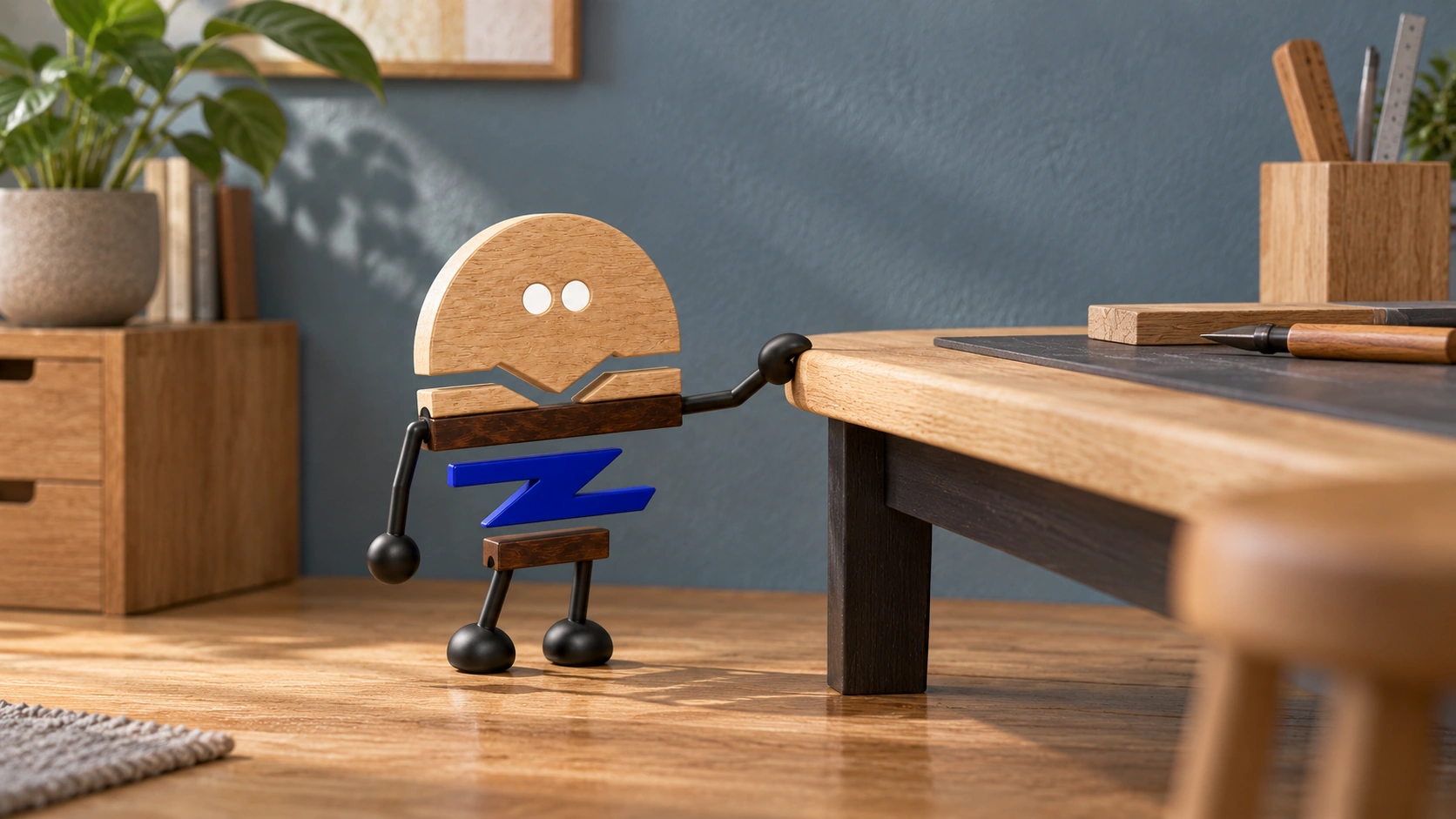
Desks, cabinets and screens each express character differently.
All three influence first impressions, but their roles differ. Treating them as one style can overlook the manufacturing conditions each needs to control.
- Key point 01Desks
Character lies in edges, side panels, modesty panels and legs. Substantial forms can express stability but feel oppressive with the wrong proportions. Curves, chamfers and selected tapers soften the appearance while preserving reliable construction.
- Key point 02Cabinets
Character comes from backdrop order. A fully closed front can feel oppressive, too many open compartments can feel cluttered, and fragmented door divisions can undermine composure.
- Key point 03Screens
Screens shape the sense of boundaries. Height, thickness, fabric, frames and connections to desks and cabinets determine whether they feel like natural transitions or temporary barriers.
05 · SELECTIVE INVESTMENT
Invest in expression where it matters.
In back-office areas, temporary offices, storage-support spaces and short-term settings, stability, durability, easy cleaning and fewer variables may matter more than refined expression.
Refined expression is more useful on frequently seen or touched surfaces in client reception, executive offices, meeting spaces, display backdrops and key areas of open offices. Cabinet doors, screens and desk edges need not all receive the same investment.
06 · TURN FEELING INTO CHECKS
Turn feelings of composure and warmth into manufacturing checks.
Manufacturers cannot directly produce 'composure' or 'warmth', but can check what creates them: edge thickness, edge banding, grain direction, door joints, open-compartment proportions, screen connections, fabric tension, junctions between soft and hard materials, and colour consistency across batches.
For large back cabinets, long meeting tables and continuous screens, partial construction samples or combined samples reveal proportions and junctions better than a single material swatch. Renderings show the overall intent; samples establish how consistently broad surfaces can be repeated.
PRACTICAL CHECKLIST
Check key surfaces at three viewing distances
Decide which surfaces deserve investment, then check whether they deliver a consistent result.
- 01First impression
On entering, do people first see the desk front, back cabinet, wall cabinets or a row of screens?
- 02From a distance
Are proportions, visual gaps, light-dark relationships and divisions stable and clear?
- 03Up close
Are edges, door joints, edge banding, screen frames and material junctions finely resolved?
- 04In use
Do desk edges, modesty panels, cabinet doors and screen heights affect movement and feel?
- 05Investment scope
Which surfaces need special attention, and which areas should stay standard, durable and simple?
Official brand product information informs the discussion of office furniture and space. Meichun perspectives and manufacturing notes express our views on products and making.
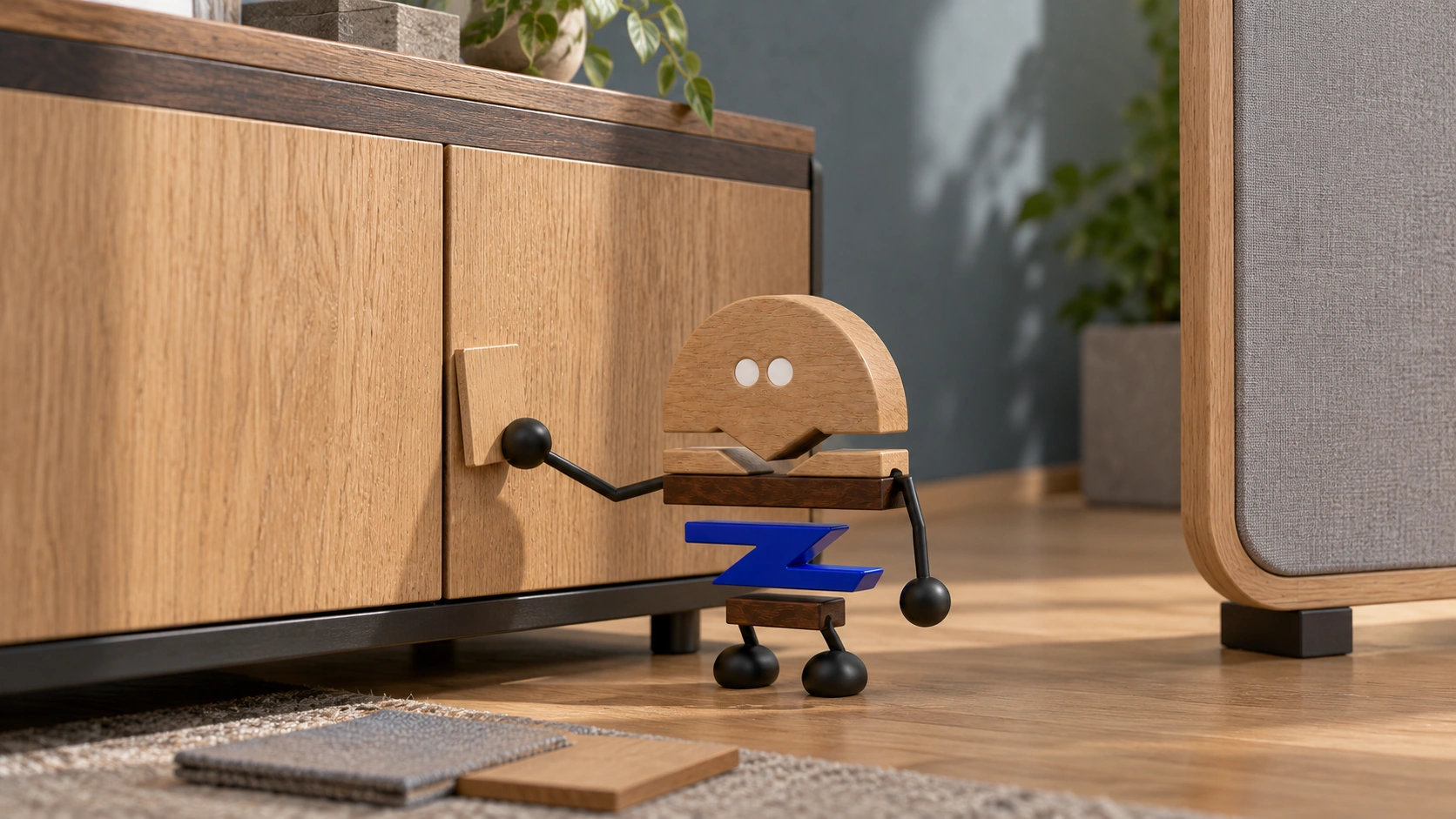
Original illustrations use the Meichun logo character and furniture to introduce product, component and spatial relationships.
- Zhongshan Meichun Office Equipment Co., Ltd.|Product and manufacturing observations on office desks, cabinets and screens
Drawing on product development and manufacturing experience, Meichun observes the proportions, edges and material junctions of office desks, cabinets and screens.