
Panel · HPL / MFC
The structural basis for panel-built cabinets, desktops and composite components. Panel layouts, drilling, edge banding and hardware connections are coordinated for consistent batch assembly.
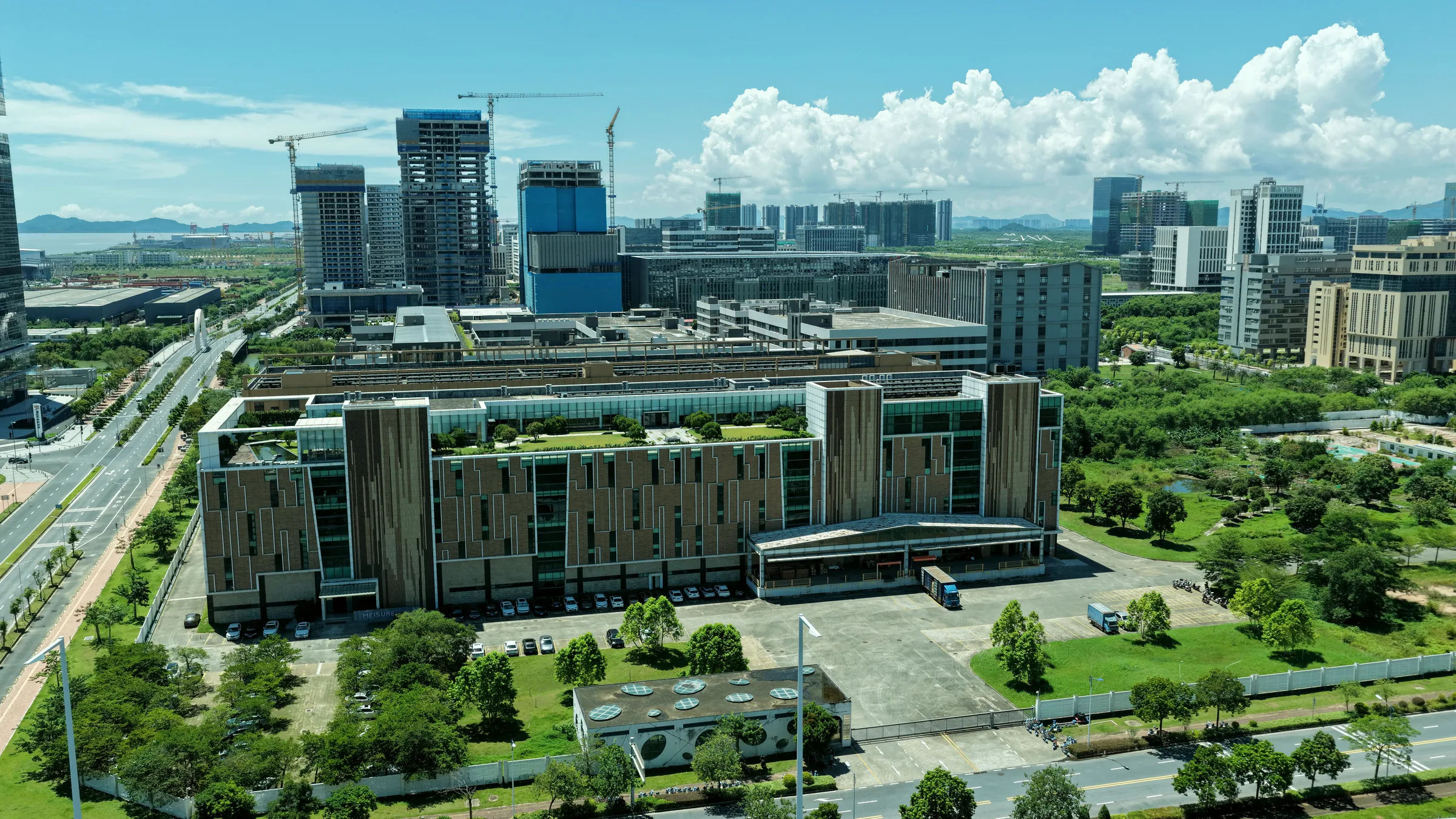
MANUFACTURING CAPABILITY
Meichun's current manufacturing park spans nearly 60,000 m² in total. Panel / HPL / MFC, fully water-based veneer finishing, upholstery and metal production work together to support OEM, ODM and co-development.
FOUR CORE PRODUCTION LINES
Each area brings its own expertise in structures and materials. During development, the teams coordinate component connections, colours, assembly sequences and the product version to keep mixed-material products consistent.
The structural basis for panel-built cabinets, desktops and composite components. Panel layouts, drilling, edge banding and hardware connections are coordinated for consistent batch assembly.
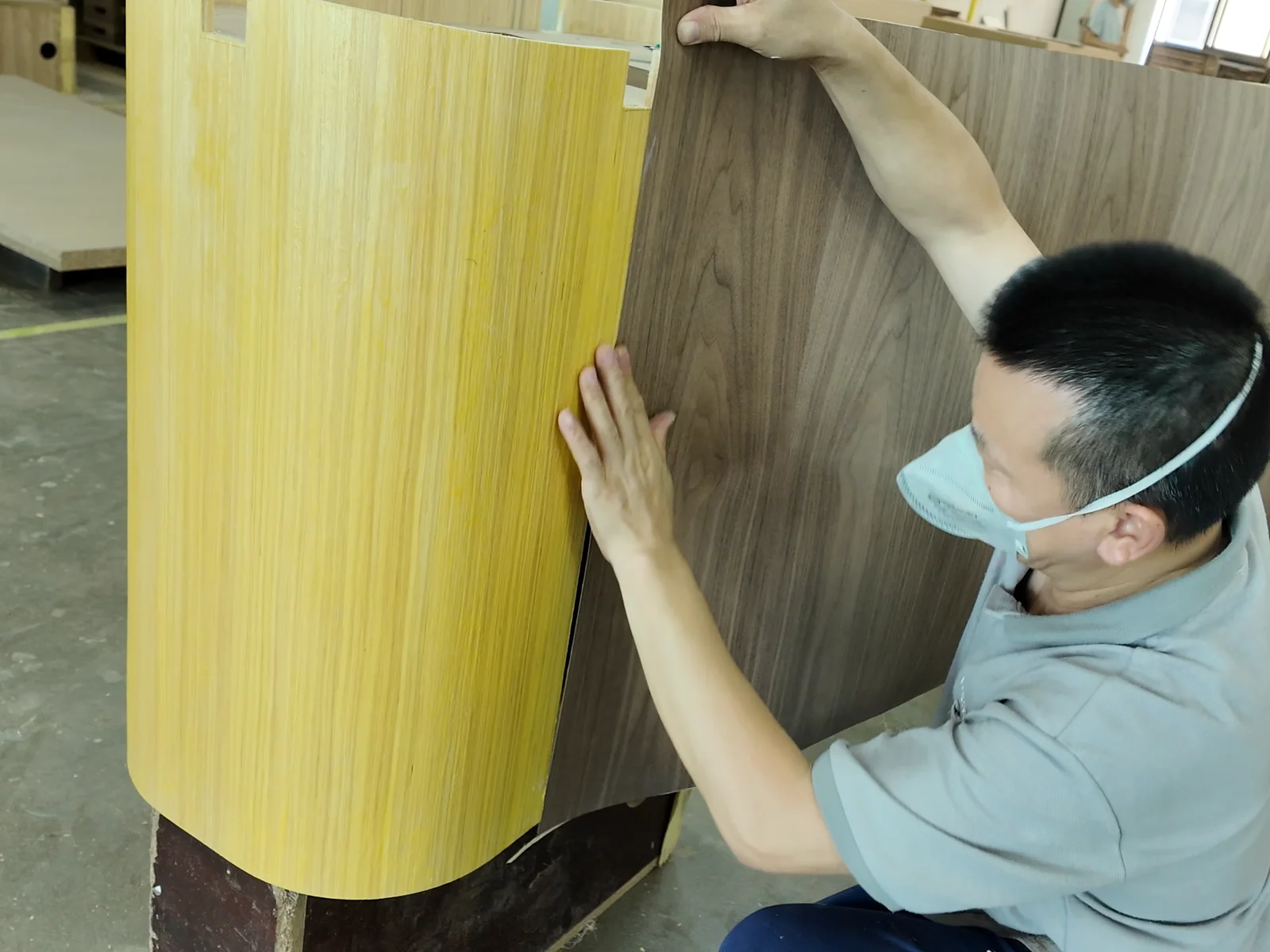
Natural wood grain, depth of colour and surface feel. Grain direction, veneer joints, substrate preparation, coatings and curing are developed alongside the structure and confirmed colour swatches.
Upholstered surfaces and cushions bring comfort and softness to a space. Shape, seams, corners and surface feel are developed in relation to the adjoining wood and metal components.
Desk frames, supports, connections and detail components. Dimensions, welding and joints, surface finishing and assembly sequences are coordinated with the other production lines.
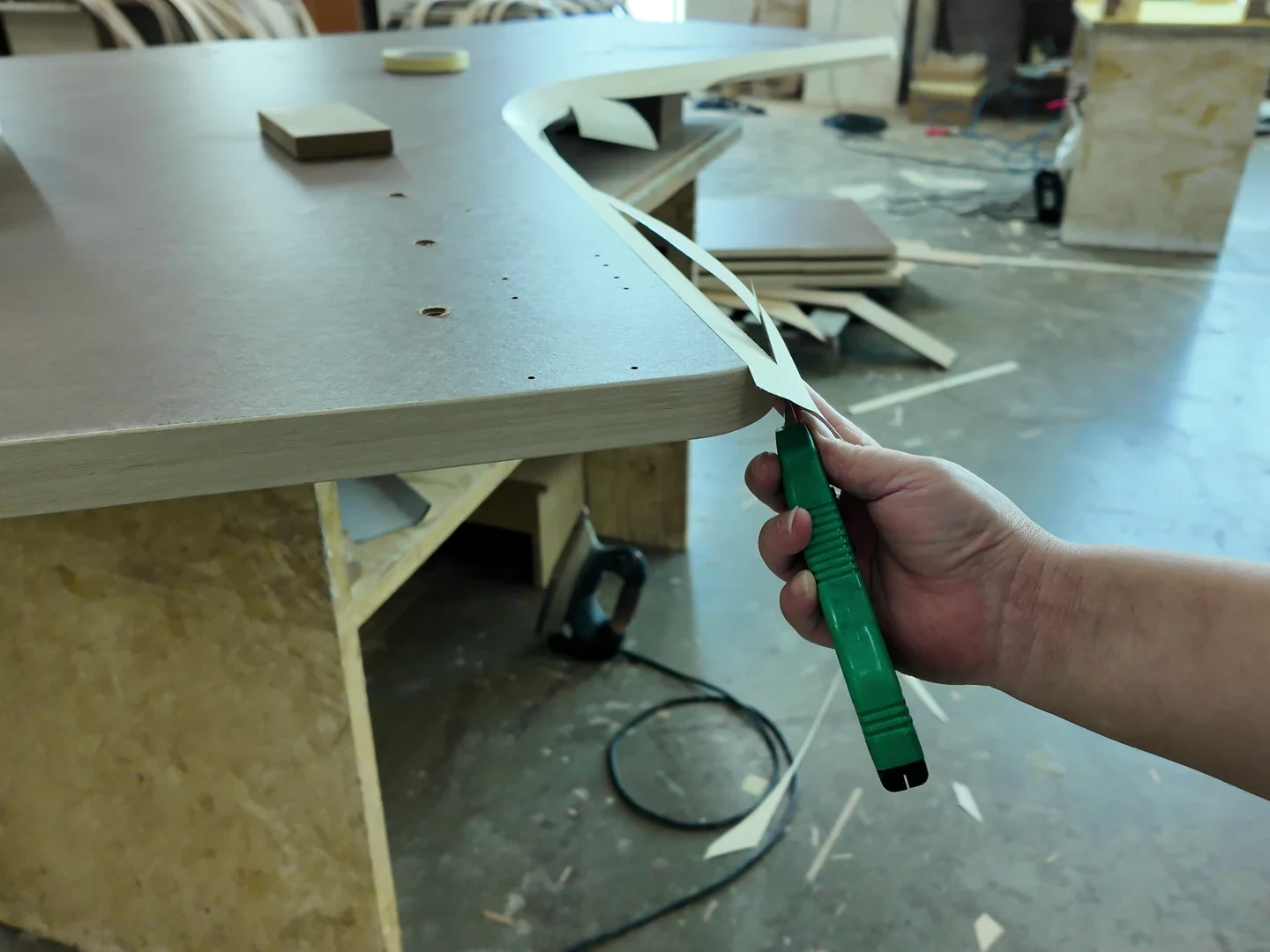
REAL PROCESS, CLEAR BOUNDARIES
See the work as it happens: materials being processed, machines in motion, details finished by hand and products taking shape in assembly.
FOUR CONNECTED CAPABILITIES
Four connected capabilities work together to manufacture office furniture with mixed structures and materials.
Consider how the product will be used, its functions, proportions, materials and delivery requirements together, developing the design into a proposal ready to sample and review.
Use physical samples to check proportions, component fit, moving parts, cable routing, surface feel and installation requirements, resolving key issues before production.
Laminated-panel, fully water-based veneer-finishing, upholstery and metal teams coordinate component connections, colours and assembly for mixed-material office furniture.
Organise production around the confirmed design, materials, configuration, batches and delivery requirements, adapting standardised management to each project.
PRODUCT DEVELOPMENT
Bring a sketch, rendering, drawing, sample or simply a direction. Together, we work through what's decided, your design preferences and what to explore next, shaping a clear product plan.
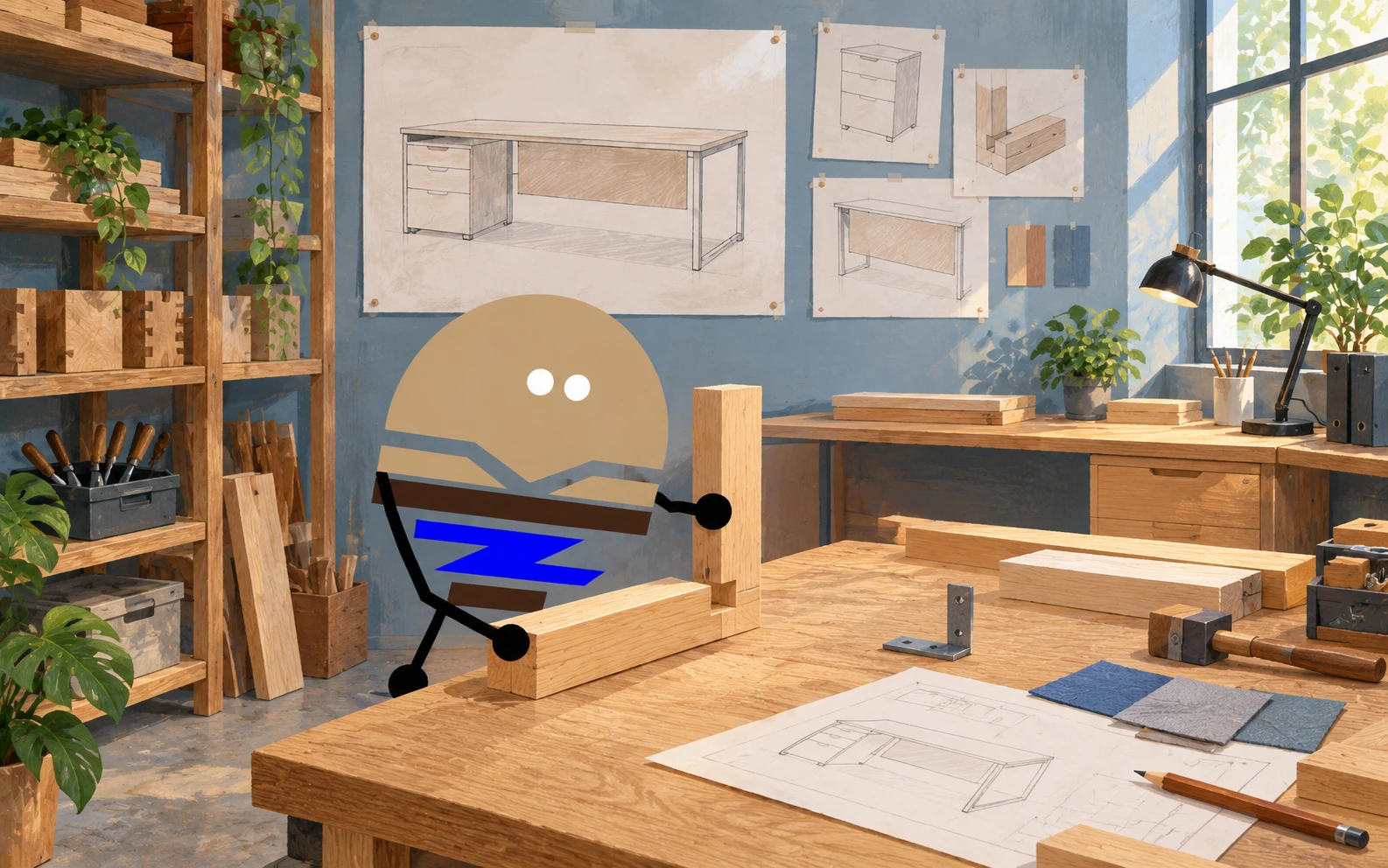
Refining a design means bringing all four sets of requirements together.
Users, equipment and storage, together with the arrangement of desks, cabinets, chairs and circulation.
Dimensions, loads, connections, opening mechanisms, cable routing, assembly and maintenance.
Wood grain, colour, transitions between soft and hard materials, edge details and surfaces touched every day.
Market, quantities, packaging, transport, timing and intellectual property boundaries.
OUTPUT OF THIS STAGE
A clear plan for structure, dimensions, material zones and key functions, with sample checks and practical steps to move the project forward.
SAMPLE VERIFICATION
Sample checks vary by product. The areas below are commonly reviewed for office furniture; standards, frequency and acceptance criteria are established for the project, its materials and the applicable requirements.
Review overall scale, supports and the main load paths.
Establish the assembly sequence for panels, metalwork, upholstery, hardware and bought-in components.
Operate drawers, cabinet doors, lifting mechanisms, flaps and cable boxes to check for interference.
Review colours, wood grain, sheen, surface feel, edge finishes and transitions between materials.
Check cable entry, power access, equipment placement and maintenance access.
Check disassembly, protection, handling, identification and on-site reassembly.
FROM INPUT TO DELIVERY
Each project calls for its own level of detail. The essential sequence remains: define the requirements, test the sample, finalise the version, then deliver.
Clarify the intended use, functions, quantities, timing and confidentiality requirements together.
Develop proportions, structure, materials, hardware, cable routing, assembly and packaging.
Turn the current version into a physical sample to inspect, operate and assemble.
Check the structure, moving parts, component fit, surface feel, cable routing and installation requirements.
Finalise the production version and key materials, then coordinate the four areas of production.
Plan the packaging around transport, installation, delivery batches and export requirements.
Record what comes up during installation and use, and carry the feedback into the product's version history.
PROJECT-SPECIFIC CONFIRMATION
Material grades, colours, hardware, testing, packaging, quantities, pricing, lead times, certification, exclusivity and territorial arrangements all shape the product plan. We’ll work through each detail with you, guided by your project’s needs.
MANUFACTURING FOUNDATION
We draw on years of manufacturing experience, our current manufacturing park and teams skilled in different materials to support product partnerships. Customer projects remain private unless disclosure is authorised.
